
Read for free: Amazon Kindle | Project Gutenberg
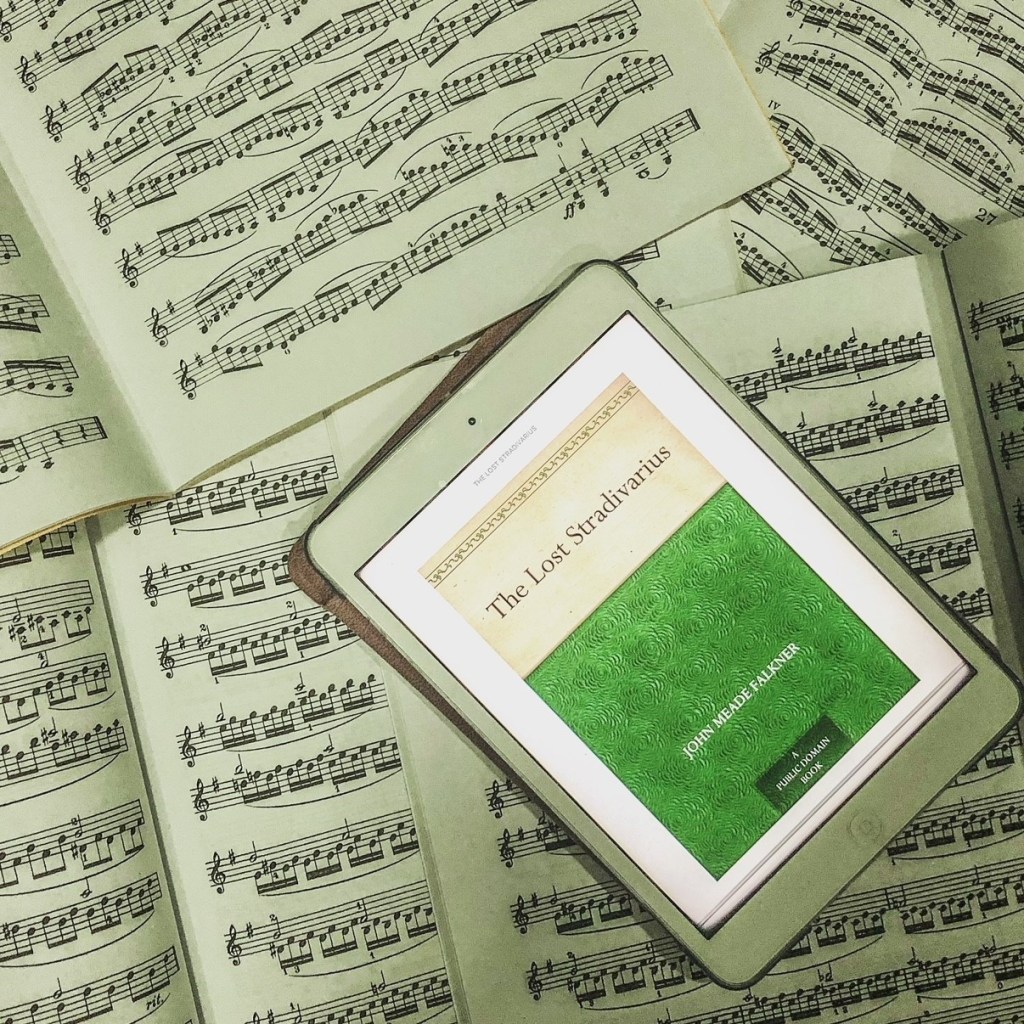
The Lost Stradivarius, first published in 1895 by William Blackwood and Sons, is a classic horror novel written by English author and poet, John Meade Falkner. The story begins when John Maltravers, a young student at Oxford and a proficient violinist, starts to notice a strange and eerie presence whenever he practices a certain music in his dorm room. With these inexplicable occurrences, he grows uneasy until one day he makes an incredible find – kept in a hidden compartment in his room is a pristine Stradivarius violin!
“… I am sure that if some music is good for man and elevates him, other melodies are equally bad and enervating.”
The Lost Stradivarius by John M. Falkner
Obsessed with this new discovery and seemingly trapped under a spell, he becomes withdrawn and neglects everything and everyone else, preferring to practice day and night alone on the Stradivarius. His unhealthy addiction to the violin and his pursuit to uncover the story behind this fascinating instrument soon leads him to dark places and proves to be the beginning of his decline.
“Music is the readiest if not the only key which admits to the yet narrower circle of the highest imaginative thought.”
The Lost Stradivarius by John M. Falkner
The story starts out great with a promising and mysterious ghostly tale. Somehow, somewhere in the middle it starts to drag out and becomes unnecessarily long. It does, however, have some really good parts that will give you goosebumps! While the story centres around the supernatural, there is an underlying message on the dangers of addiction and what it could lead to.
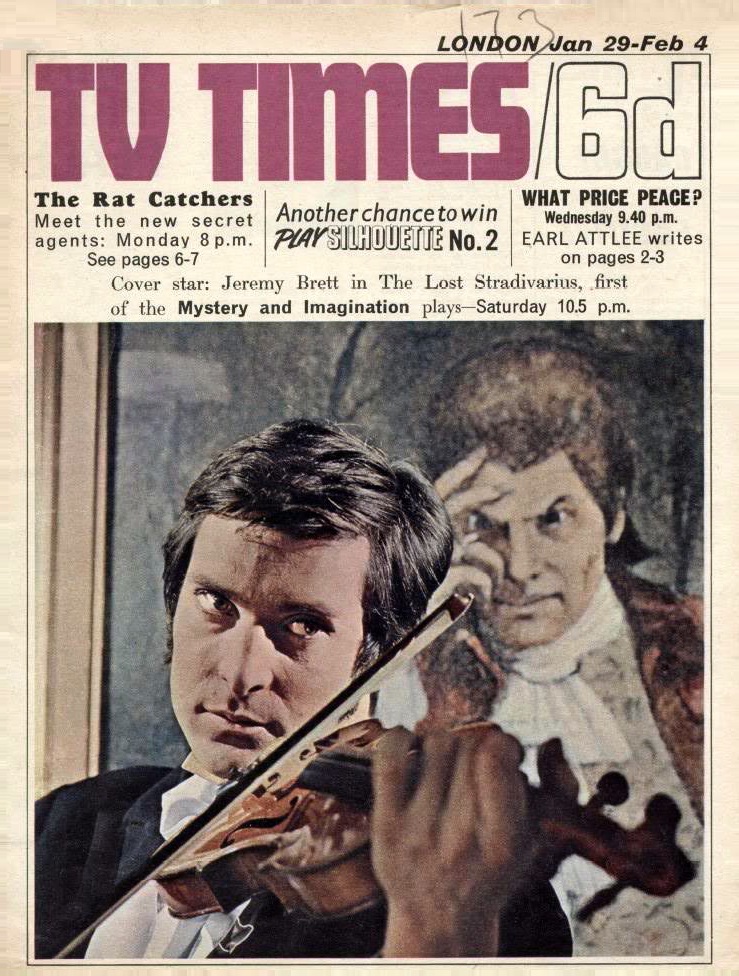
With some adjustments to the story line, this could really make a nice horror drama. In fact, in 1966 it was adapted into an episode on British TV’s Mystery and Imagination series in which actor Jeremy Brett played the protagonist (In case you didn’t know, Brett also used to play Sherlock Holmes in the 80s and 90s). Unfortunately, no known copies of this particular episode are available.
Overall, despite the drag in the last half of the book, this story is a fine example of a gothic tale that is well written. So do take your time to indulge in the beautiful prose and descriptive scenes. Just make sure you don’t read it in the dark!
 www.booknightingale.com