
Poetic. Lyrical. Dreamy. These are just some of the words that describe this novel. First published in Japan in 2015, The Forest of Wool and Steel won the Japanese Bookseller prize in 2016 and was translated to English in 2019. More than a million copies have been sold since and it’s not difficult to see why. In fact, it was so popular that it was turned into a movie of the same name in 2018 – its title in Japanese is Hitsuji to hagane no mori.
Written by a Pianist herself, this novel follows the story of 17-year-old Tomura who sets out to learn piano tuning after observing Mr Itadori tune an old piano at his school. The process fascinates him and the warmth that emanates from the sound of the piano as the hammers hit the strings, takes him back to a place in the mountains. And when he closes his eyes, he feels the forest. The leaves. The trees. He is determined to learn the secrets of piano tuning.
“There’s no shortcut through the forest. The only way forward is to keep honing your skills, little bit by little bit.” – Natsu Miyashita
His journey, though, is not always a smooth one. Sometimes riddled in self-doubt, he often asks himself if he will ever get there. What makes a great piano tuner? Is there such thing as perfection? And will he be able to evoke the “bright, quiet, crystal clear” touch that Mr Itadori speaks of?
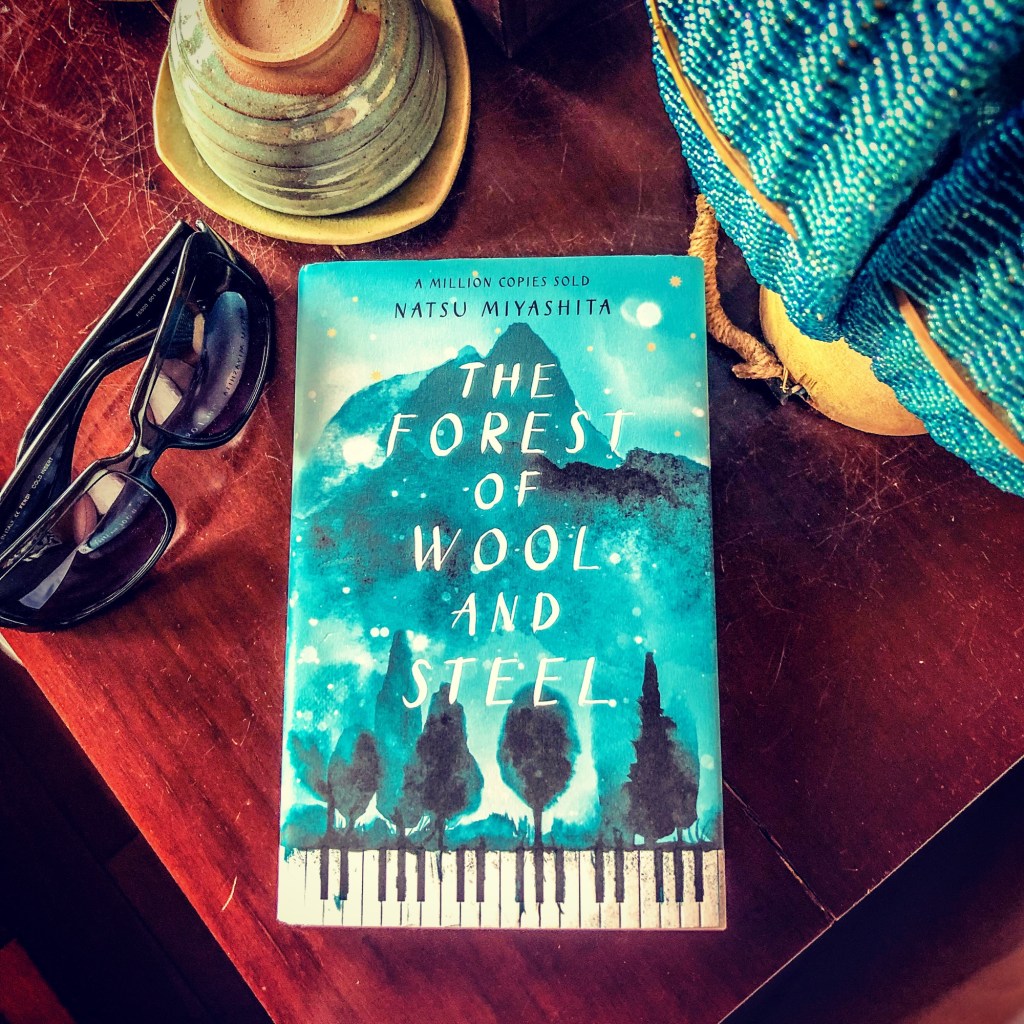
“Had I really forgotten this place? Was my heart no longer here? The wind picked up and the scent of the forest grew sharper in my nostrils. Leaves rustled; branches rubbed together. When the still-green needles of the Yeddo spruce fell they made a sound that was outside of my musical scale. I rested my ear against a rugged trunk and could faintly pick up the suck of water being absorbed through the roots. The jay screeched again.” – Natsu Miyashita
Tomura’s growth from an uncertain young apprentice to a professional tuner who continuously seeks to improve his craft is simply heartwarming. While the topic of piano tuning is niche, everyone can learn something from this book – from the importance of humility and the magic of self-discovery to the immense value of hard work, passion and perseverance.
What’s more, through her lovely prose, the writer is able to highlight the beauty of seemingly mundane little things in life – conversations, day-to-day interactions, the smell of the forest, the feel of the wind, and so on. And thanks to Philip Gabriel, the translator behind this book – the rest of the world are able to enjoy this brilliant work by Natsu Miyashita. Overall, it’s a true joy to read.
 www.booknightingale.com